
"Taiwan coffee culture"
1000 article(s) found

The development and present situation of coffee in Taiwan, the most famous coffee in Taiwan is Gukeng coffee.
For information, please pay attention to the coffee workshop (Wechat official account cafe_style). Taiwan's coffee culture is deeply influenced by Japan due to historical reasons. now, ground coffee has become very common, and fine coffee and hand-made coffee have gradually become the mainstream of fashion. There were only a handful of Taiwan cafes in 1930 and 1940s, but several well-known cafes such as Polly Road, Shanshui Pavilion and Tianma teahouse

A brief introduction to the history and culture of the origin and development of sweet and mellow Mahi boutique coffee beans
Mafeel coffee ranks first in Asia and eighth in the world. Alishan Mafeel coffee belongs to alpine coffee and belongs to the high-quality boutique coffee in Taiwan. It ranks first in Asia and eighth in the world. Coffee trees are mainly planted in southern Taiwan, such as Alishan, Chiayi County, Taiwan, because Alishan is located at a high altitude.

Coffee introduced by Taiwan businessmen spawned coffee industry in Nanjing, Fujian
At present, Nankeng Coffee Tourism Park has a daily passenger flow of 600. coffee beans are in short supply, with an annual income of 800000 yuan on coffee beans alone. And 500000 coffee seedlings are being cultivated to be provided to local farmers next year.

How much do Taiwanese love coffee? The average person drinks a hundred cups a year.
Cama coffee shops can be seen everywhere on the streets of Taipei. Milk Glider (milk glider) Lin Zixuan won the top spot in the Northern District in the 2015 TNTTW International pull Flower Competition Taiwan trials. In 1960, the Star Cafe on Wuchang Street in Taipei. Whether it's staying up late to work overtime, getting up early to go to work, or best friends' afternoon tea or business talks, Taiwanese like to drink coffee. Taiwan

Lim Dong-Won, Prince of Coffee of Taiwan, falls in love with coffee flowers.
He loves coffee and prefers to play with it; he runs a coffee shop and adheres to the coffee culture. On the afternoon of July 14, Lim Dong-Won, known as the Prince of Coffee in Taiwan, presented a wonderful lecture and coffee performance at the second Hercynian Baking and Coffee Exhibition. He said that making coffee is not only an aesthetics, but also a spiritual dialogue between himself and himself. Profile: Lim Dong-Won, virgin

Taiwan ice drop coffee and slow hand coffee enter the American market.
For the exchange of professional baristas, please pay attention to the coffee workshop (Wechat official account cafe_style) American coffee culture pursues efficiency and high intake. A number of Taiwanese coffee products manufacturers display different hand-brewing tools in New York for the first time, hoping to infiltrate the taste of slow-dripping coffee into North America.

Chen Weiming, the second Generation Entrepreneur: promoting Coffee Culture at the people-friendly Price
Chen Weiming, from Hsinchu, Taiwan, came to Kunshan to settle down and study with his parents in the semiconductor industry at the age of 10. Because his father wanted to invest in a new business to start a coffee shop, and he was not interested in taking over his father's semiconductor business, he was very interested in opening a coffee shop, so he was in charge. It just so happens that the president of Kunshan Taiwan businessmen Association also hopes to set up a coffee shop in the Kunshan Taiwan Association Building.
Coffee culture is cheap and good coffee is hard to get.
I don't have to be a professional to drink freshly ground coffee beans, but a cup of coffee with sandwiches every morning has been my habit for years. When I used to live in Taiwan, the freshly made sandwiches at Meimei breakfast and a cup of freshly brewed coffee from the convenience store were my most common and casual breakfast. It's just such a simple and readily available breakfast in Taiwan.

Taiwan Coffee Godfather Huang Chongqing: Changsha has a huge market potential for developing boutique coffee
Coffee king Huang Chongqing is using a siphon pot to extract the world's most expensive boutique Colombian Gesa coffee.) (coffee King Huang Chongqing [right] to exchange ideas on the promotion of boutique coffee culture with Changsha coffee lovers.) Red net reporter Chen Siyi Changsha reported on December 6, 2014 World Barista (barista) competition Changsha competition kicked off in front of Juzizhou Jiangshen Temple. All

A brief introduction to the Origin, Development, History and Culture of Malay Fine Coffee beans with full Fruit
Mafeel is a language taken from the Zou people of the Alpine nationality in Alishan, which means delicious. Alishan is the area where coffee is grown, while the Alishan coffee is grown by the Zou people themselves and is also named Mafeel, and the coffee grown belongs to Taiwan coffee. Due to the low production of Mazu coffee in Alishan, Taiwan coffee is scarce. Alishan Mazu (Mafeel

A brief introduction to the History and Culture of the Origin and Development of Malay Fine Coffee beans
Mafeel is a language taken from the Zou people of the Alpine nationality in Alishan, which means delicious. Alishan is the area where coffee is grown, while the Alishan coffee is grown by the Zou people themselves and is also named Mafeel, and the coffee grown belongs to Taiwan coffee. Due to the low production of Mazu coffee in Alishan, Taiwan coffee is scarce. Alishan Mazu (Mafeel

Chinese Coffee Culture Coffee was first planted successfully in Taiwan Province in 1884.
The history of the introduction of coffee into China is not long, and it was not until 1884 that coffee was first planted in Taiwan Province. In the mainland of the motherland, the earliest coffee cultivation began in Yunnan. At the beginning of the 20th century, French missionaries brought the first batch of coffee saplings to Binchuan County, Yunnan Province, and began to grow coffee in the mainland. In terms of natural conditions, many parts of our country and

A brief introduction to the Origin, Development, History and Culture of Mai Fine Coffee beans with the most unique Flavor
Alishan Mazu Coffee is one of the best instant coffee, produced in Alishan, Chiayi County, Taiwan Province. Adhere to strict manual players to pick, draw mountain spring water fermentation, made by the full sun of alpine coffee beans; Alishan Mazu Taiwan coffee beans are strictly grown in Alishan mountain coffee beans at an altitude of 800m to 1300 meters above sea level, belonging to Arabica beans. Mafeel is taken from Ali.

A brief introduction to the history and culture of the origin, development and development of Alishan coffee in Taiwan.
I was surprised by the performance of this sun-dried bean. At first, it smelled dry and slightly fermented, but at the entrance, it suddenly turned into a clean, rich, multi-layered fruit with sweet and sour taste, without a hint of indecent taste. It was amazing. I was surprised that Taiwan could make such a great sun bean. Former chairman of the Fine Coffee Association of America and former Counter C.
Chinese Coffee Culture
The history of the introduction of coffee into China is not long, and it was not until 1884 that coffee was first planted in Taiwan Province. In the mainland of the motherland, the earliest coffee cultivation began in Yunnan. At the beginning of the 20th century, French missionaries brought the first batch of coffee saplings to Binchuan County, Yunnan Province, and began to grow coffee in the mainland. In terms of natural conditions, many parts of our country and
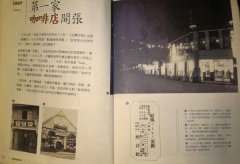
The earliest coffee shop in Taiwan: an introduction to the coffee shop culture in the old society
Xiyangxuan, a cafe at the west gate of Taipei in 1897, and the Lion Cafe in the Park in Taipei in 1912 appeared at the Witt Cafe in Taiping Town, Taipei in 1931. The earliest cafe in Taiwan was called Xiyang Xuan in September 1897. There was an advertisement for the opening of Xiyang Xuan, a restaurant that called itself a teahouse. It sold Western food and wine, but it was advertised.

Introduction of cafes with Taiwanese characteristics: if you don't soak in these cafes in Taiwan, you will go for nothing!
Coffee boutique life to travel to Taiwan, be sure to find a cafe for half a day, slowly feel Taiwan's unique cultural flavor and artistic temperament. The following six cafes, with old brands, newcomers, traditions and alternatives, have their own characteristics, which reflect the diversity of Taiwan in different ways, and are a cultural experience that can not be missed when traveling to Taiwan. Witch shop: heavy flavor, small and fresh
Taiwan Coffee Festival Baking Competition takes place today
The coffee roasting competition, the highlight of the Taiwan Coffee Festival, took place today. Su Zhifen, head of Yunlin County, Lin Huiru, head of Gukeng, and Liu Qingsong, dean of Taiwan Coffee Agricultural College, opened the oven at Huashan Primary School yesterday to show coffee style with strong coffee. The Taiwan Coffee Festival has entered its 11th year. In order to promote Taiwan coffee and deepen the cultural connotation of Taiwan coffee, local coffee experts and

A brief introduction to the Origin, Development, History and Culture of Taiwan's Alishan Maha Coffee with mellow Flavor
In Taiwan, which is also on the golden belt of coffee cultivation in the north and south latitudes, the altitude, air, local brew quality and temperature of Alishan are all very suitable for baking good coffee beans of high quality. However, since the British first brought coffee trees to Taiwan in 1884, they have been unknown for more than 100 years. At the same time, they did not cultivate them attentively, and they missed the Japanese occupation period and the American aid period.

A HISTORY OF THE INTRODUCTION AND EXPANSION OF COFFEE IN EARLY CHINA (IV)
1. 1.1 In May 2004, the author investigated the coffee growing areas of Gukeng and Alishan in Yunlin and Chiayi counties, Taiwan. In November 2009, I visited Gukeng in Yunlin County, Dongshan Coffee Planting Area in Tainan County, Jianhu Mountain World Coffee Museum, World Coffee Exhibition in Taipei and Taiwan National History Museum.